
Our stories
Download in Polish or English
Stories & Videos
Hayley Yago
Nayem
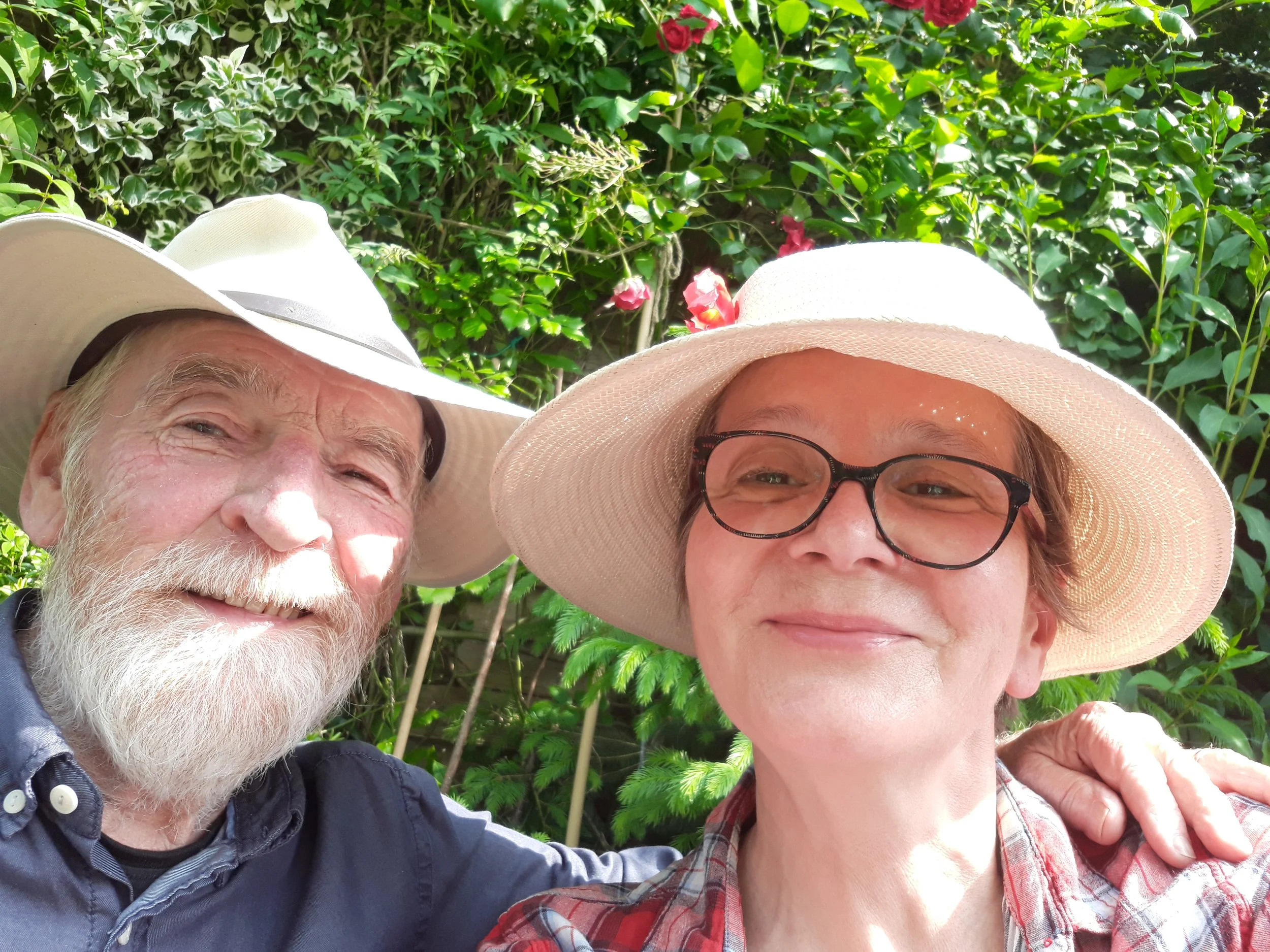
Halina & Brian
-
How did you come to Belfast? /When?
I met my husband in a pub in East Germany in June 1986 while visiting my university friend. The chat was so good that we decided to keep in touch. Letters were the only option at that time as the mobile phone wasn’t yet invented. Censorship of all correspondence with the West was ongoing. I was interested in what was going on the western side, he wanted to learn more about the East.
(It was the beginning of the end of the cold war. Poland was already changing with “The Solidarity” movement gaining strength and other east bloc countries following her example. Free Polish elections took place in June 1989 and Berlin Wall fell on the 9th of November 1989.)
My husband learnt more about the East by visiting Poland twice but I couldn’t travel to UK.
At that time the British Embassy was very reluctant to provide visas for people from the Eastern Bloc wanting to see UK. It didn’t stop us from keeping in touch and our friendship slowly changed to something deeper and resulted in a marriage. We were married in Poland in 1989 on Saint Patrick’s day.
When did you come here?
I arrived in Belfast in July 1989.
From a society in difficulties to another still experiencing difficulty.
It was a trying time, but it helped me to understand that we are all the same and have similar struggles.
While here I’ve learnt that no matter where we live, where we come from, we can all prosper and live in peace by respecting and understanding each other.
Love for my husband brought me here, but while here, I fell in love with the country and its people, who I admire for their empathy, selflessness and simple humanity. I love the banter and chat on the street with complete strangers sharing their stories. I feel safe here, and know, that no matter what, there will be someone to offer me a helping hand. I have been living here for 37 years now and call it home not only because my immediate family lives here but because it is a place and a people I feel I belong to.
What do you do?
I am retired now but for 35 years I worked as a librarian in public libraries.
During that time, for about 25 years, I also worked as an Interpreter/ translator for various agencies and for about 10 years I taught English to Polish kids and adults.
Have you lived elsewhere?
I lived for 32 years in Poland, from birth until my marriage to my Irish husband.
So I have been living in Northern Ireland, in Belfast, for the last 37 years.
Languages
I speak Polish and English and I am slowly forgetting my Russian. My German, through which I met and spoke to my husband, has more and less left me now.
Belfast sayings and traditions.
The most cherished by me is the use of the word “love” while being served in shops, offices etc.
Also the phrase “I need it like a hole in the head” which I use when telling my husband to leave me alone – I really don’t want this.
The custom that really warms my heart is total strangers greeting me with” hello”, “how are you doing”, accompanied quite often with a wee nod of the head.
What home means for you?
Main descriptions:
Family, love, safety
Home for me is many things but the one standing out is my family.
First it was my parents and 5 sisters, my grandparents and 11 uncles and aunts with their families. That was when I lived in Poland. After my marriage, my new family and parents came to the fore.
This was the time that I felt I had two homes.
Home- Poland
Home was the smell of food when entering the family house,
the smell and colours of the meadow behind my parent’s garden.
Home was the walk in the forest picking mushrooms and berries.
Home were the songs that we sang in Poland on many occasions not just Christmas carols.
Home-Northern Ireland
Now, both my parents are dead, my own family (my husband and son) is the most important element in what I call “home”.
This is here in Belfast, Northern Ireland.
Home is my small garden full of flowers, veg and fruit trees.
Home is the mist and hills of Donegal and nostalgic slow airs.
Home is people that I meet every day here and their chat and banter that is so refreshing and human, that helps me not to feel alone.
Home is a place where I feel safe and comfortable.
Where do you consider home?
After emigrating, for a very long time I wasn’t sure where my home was. I was torn between Poland and Belfast. I missed my family in Poland a lot. After each trip back to Poland, I needed some time to settle my longings. For a long time I lived in-between two homes, my parents in the small village surrounded by forest in Poland and my own in the city of Belfast.
From the perspective of time and experiences, I think these feelings must be familiar to many migrants.
Although I still hold Poland and my sisters close to my heart, the loss of my parents highlighted the shift in my sense of where my home is.
This is Belfast. Home is Belfast.
Damian's story
-
“Once the travel bug bites there is no known antidote, and I know that I shall be happily infected until the end of my life”- Michael Palin
I was a very curious child, interested more in the workings of toys than the toys themselves. As long as I remember, certainly in primary school, this curiosity channeled into learning about the world around me. I lived in a small, sleepy town in south-western Poland. This was my family home. It is a place and community where pretty much everyone knows everyone and all are comfortable in their daily roles.
In my teens I became restless, eager to experience the wider world outside my town. I wanted to meet new people and in different environments. I wanted to be independent and make my own choices. At 19 years of age I moved to Wroclaw, the capital of Lower Silesia, to study. The city was full of young people bursting with energy and positive, happy vibes. Wroclaw was the place where my travel bug took hold. I studied and worked to fund my travels. I saw many places in Poland, although foreign travel really opened my eyes and further fired my curiosity. Since then, I travelled through Czechia, Slovakia, Germany, Slovenia, Netherlands, Belgium, Croatia, Montenegro, Austria, Italy, France, Greece, Spain, Portugal, Ireland, United Kingdom, Mexico and USA. I visited many places of outstanding beauty and met so many people with different cultural values from mine. Travelling not only heightened my senses, but also helped me understand the differences and learn to be at ease with strangers without fear or prejudice.
I feel European. I am proficient in Polish and English. I can communicate in German and have a basic knowledge of Dutch. I also completed GSCE in Spanish.
While in Holland I met very friendly, happy Irish guys and decided to see Ireland. I came here in January 2005. Over 21 years later and I am still here. Now I am a married man with two kids and working as a civil engineer for a big international firm. Belfast is a place where I am settled now and happy, but my “travel feet” are itching and I don’t know where I’ll be in 20 years time. For me, home is the people and bonds that are established between them. I feel European, yet think of myself as a citizen of the world.
I am an optimist and view Ireland as a happy place. You can see it in day-to-day life. Happiness, positivity and togetherness play a big part in Irish traditions. One example being St Patrick’s Day celebrations, a carnival that brings everybody together in a joyful and friendly atmosphere. To my personal delight, Halloween here, as opposed to the somber Polish All Saints' Day, is also about fun and being together without the scary experience, especially for kids, of visiting graves in the cemetery. Even catholic masses here are conducted in a friendly and happy manner.
I still continue celebrating Christmas and Easter the Polish way, although with an added Irish twist. Christmas is on 24th of December with Polish food served, but presents are opened according to Irish traditions on 25th. Easter also follows Polish traditions, but the Irish Easter bunny brings chocolate eggs for kids. There is one Polish tradition that I miss and that is Sylvester, the last night of the year which means a big party with lots of people and fun, similar to Scottish Hogmanay.
Other things that I miss from Poland are my family and friends, many of whom are now scattered all over the world. Weather in Ireland can sometimes be challenging. I love nature and walking. Although the countryside here is beautiful, I miss forests and find it difficult to ramble freely due to roaming laws that allow access only to publicly owned and managed spaces.
I am a born traveler and will continue traveling. My sense of home relates to people. Perhaps like Michael Palin, when my travels are done I’ll have a base to return to- Belfast being the place.
Monika's story
-
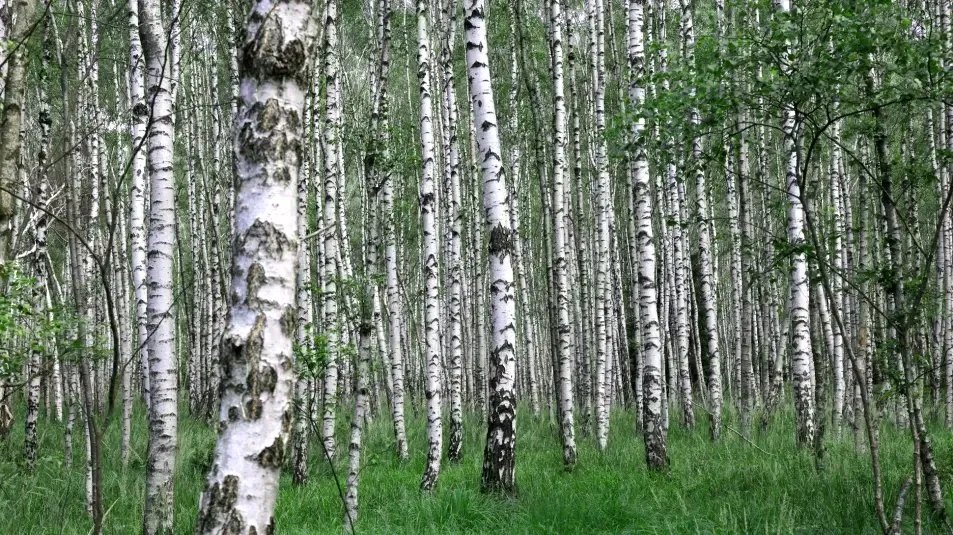
Home is this one, tiny, special place of safety on the Earth, where I feel comfortable and happy. A place with a birch tree in the garden that I have here in Belfast.
My home in Poland is a family home where my parents, sister, grandparents and extended family live/lived. It was the happy family home of my youth. It was a place where I was enchanted by a cluster of birch trees with their beauty and seasonal spectacle of change.
I come from a small town in Podkarpacie province, located at the foot of Karpaty mountains in south eastern Poland, the most eastern part of the European Union. Some say that Podkarpacie is the greenest and the most unspoiled part of Poland, on a par with so many places in Ireland. It also is the poorest part of Poland, from where, in the past two centuries, like in Ireland, many people emigrated to USA. After the collapse of communism in 1989 and then, in 2005, Poland joining European Union, many of my country men emigrated again, but this time within Europe. I am one of the so called economic migrants. I came to Belfast in March 2007.
My early dreams and hopes were working in a bank, but when I finished my Technical School of Economics at the beginning of the nineties, my country was going through an awful upheaval. Changes from Socialism to the new capitalist system brought massive closures of factories and smaller firms, creating the worst unemployment and inflation that my country had experienced since the second world war. My father worked for Polish Railways for his whole life, as did his father and the rest of the family before him. He lost his job due to privatisation. He died at 47 not long afterwards.
I was so happy when finally I got a wee job in a shop. It meant I could contribute and help. This wasn’t enough and to help further I started altering clothes in the evenings. I learnt sewing at home when I was small by watching my mum and dad who also sewed clothes for us. My parents got a sewing machine for their wedding present and everybody had a go. My wee sister made her outfit for graduation day, decorated with beautiful embroidery, all by herself. I became good at dealing with people and sewing but we were hardly surviving.
The situation wasn’t getting any better and the house went into disrepair. The European borders were already open for workers, so I made the hard decision to emigrate. Initially I planned for a few years to get money to straighten the house, but I am still here. The house is straightened now and mum, in her old age, is worry free.
I was lucky. The Zip Yard alterations firm in Belfast advertised for seamstresses, so when I came here the job was waiting and I had a room to live in. I started straight away. I worried about the language but most of the other workers were Polish although one of them spoke English as a go-between. I knew the job inside out already but very quickly decided to learn English to be able to communicate with local people and learn about the country and its ways. With better English and aspiration growing from altering clothes to sewing clothes, I left Zip Yard and went to sew wedding dresses. I did that for 3 years but due to business closure I moved to Belfast Alterations and when the owner left I took over the garment alteration shop. I work 6 days in a week and love my clients and the chat.
Home for me is Belfast. I feel a part of this community and I am looking forward to pay off my mortgage, retire here and watch my birch tree growing. I planted it in my garden when I bought my wee house and hope that it will grow gracefully to the end of our days.
I still go to Poland and spend all my holidays with my mum and the family there. Mum doesn’t want to come here, because, as she says, you don’t uproot an old tree. I continue to follow a Polish Christmas but prefer to eat chocolate eggs for Easter as is the custom here.
Within old Polish traditions the birch tree is often called the lady of the woods. It is associated with young female souls, protective spirits and rejuvenation of nature.
Nadya’s story
-
Home is a place where my family and friends are. Familiar, comfortable and a peaceful place, where we meet, laugh and chat, eating food and sharing stories. The other thing that I connected with home was work, where I was happy surrounded by people and financially independent. I am an economist and I worked in a bank.
All this changed after the Russian Invasion of Ukraine in February 2022. Like many millions of Ukrainians, I felt that I had no other option but to protect my son and leave my country. Urged by my family, frightened and emotionally broken, we left Ukraine and arrived in Northern Ireland in May 2022.
International Red Cross helped us to settle here. I am eternally grateful for this opportunity and help. My son and I feel safe here. He was able to continue his education in Belfast Royal Academy. Loves his school, teachers and has made lots of friends. His English now is as good as his Ukrainian and much better than his Russian and Polish. It warms my heart to see him being happy, doing well at school and adapting so well to this new country and its people. I think he now has two homes, one in Belfast, one in Ukraine.
We escaped the war but my family members are still there and we miss them terribly. Although home for me is Ukraine, but for now, Belfast is my home.
I speak Ukrainian, Russian, have a good grasp of Polish and am doing my best to learn English. I want to chat to people and work, be a part of the community here. Irish people are friendly and cheerful and smiling. It feels so human when strangers greet you with “Hi” or “How are you doing?”.
There is a difference in our traditions from most of Irish traditions, which generally, I think, have a happy undertone. Old Saint’s Day is a sombre day in Ukraine and especially sad now. Halloween here is a time of joy and laughter. Homes are decorated with Halloween paraphernalia and I like the tradition of kids tricking and treating and calling at doors.
I love the St Patrick festival, celebrating Irish culture and traditions in a positive and cheerful spirit. Both of them delight me and bring a smile to my face.One of the most important Ukrainian traditions for me is Christmas. I keep this tradition here. It was always celebrated on 6th of January, but after the Russian Invasion of Ukraine, the Ukrainian Church separated from the Russian Church. Now we celebrate Christmas on 24th of December. We serve 12 dishes each representing a month of the year, with variety of traditional foods such as fish, borsch, pierogi, special doughnuts, kutia etc. but without meat. We sing and sing. We love singing. In Ukraine kids walk around their neighbourhoods singing carols and getting wee gifts like kids in Northern Ireland get for Halloween.
The war in Ukraine separated my son and I from our dearest and our country. Belfast and its people provided us with sanctuary and allowed us to learn and experience a different culture, traditions and “feel at home”. I met wonderful people here. I believe that people, regardless of their different upbringing, culture and traditions can, with peace, live and prosper together.
Saravana’s story
-
Home for me is a feeling of belonging, being understood and at ease with myself without words and explanations. It relates to places and people.
Home in the past was in India. It was a family home, where familiar surroundings, weather, people with their customary behaviours were part of my growing up as a young man.
Home now is in Ireland-Belfast. It is my own home, where I live with my wife and a daughter, as husband and dad, family man, happy with his little family. This new home allowed me to learn and discover new surroundings, people and their customs. We hope we can stay here for good.I came to Belfast in February 2022 with my wife and baby daughter. I am an IT engineer. After finishing my studies I started working for BT in India, then I was sent to England for a year and after that posted to Belfast in February 2022. I am still working for the firm. I am happy in my job and the opportunity it provides in meeting local people and learning about life here.
A few years ago, my wife started working as a teaching assistant in a primary school. It gave her a chance to meet people and become a part of the local community. Our daughter attends primary school and loves her school, where she has good friends.
We all speak English. My wife and I learnt English in India, where all our education was conducted in English. English is a second language for us but the first language for our daughter. Telugu is our mother tongue. Telugu is part of our heritage and we speak it mostly at home. We try to keep it going to help our daughter learn and keep the language of her grandparents alive.
What I really miss from India is outdoor living. There are big differences between here and India. The main element is the weather that influences the vegetation, food, clothes, designs of houses and living styles.
When I first came to England in the late autumn for the first time I experienced such cold, then snow and frost that made walking difficult. I had to buy and learn to wear warm clothes and get used to house heating and adjust to living inside. I really missed the sunny, hot days, outdoor activities with family, friends and neighbours. I still miss the tiled floors and being able to walk in the house barefoot all year round. There are things that, like the weather, you can't change and you learn from local people what to do.
For Indians food is very important but most of the items are available here. These aren't only a source of nourishment but also medicine. Spices are central. Any Indian granny and mum knows how to treat cold or indigestion with, for example, turmeric, fenugreek or cardamom seeds. Nothing is served without spices added. My Irish friend laughs, saying that we don't know how any vegetable really tastes. All dishes are made from scratch and eaten fresh. In my family we don't eat pork and beef, only chicken and fish and on Friday we are totally vegetarian. My wife follows Indian cuisine but I am happy to explore local food. I’ve discovered Fish and Chips and become quite fond of Irish breakfast but without the meat.
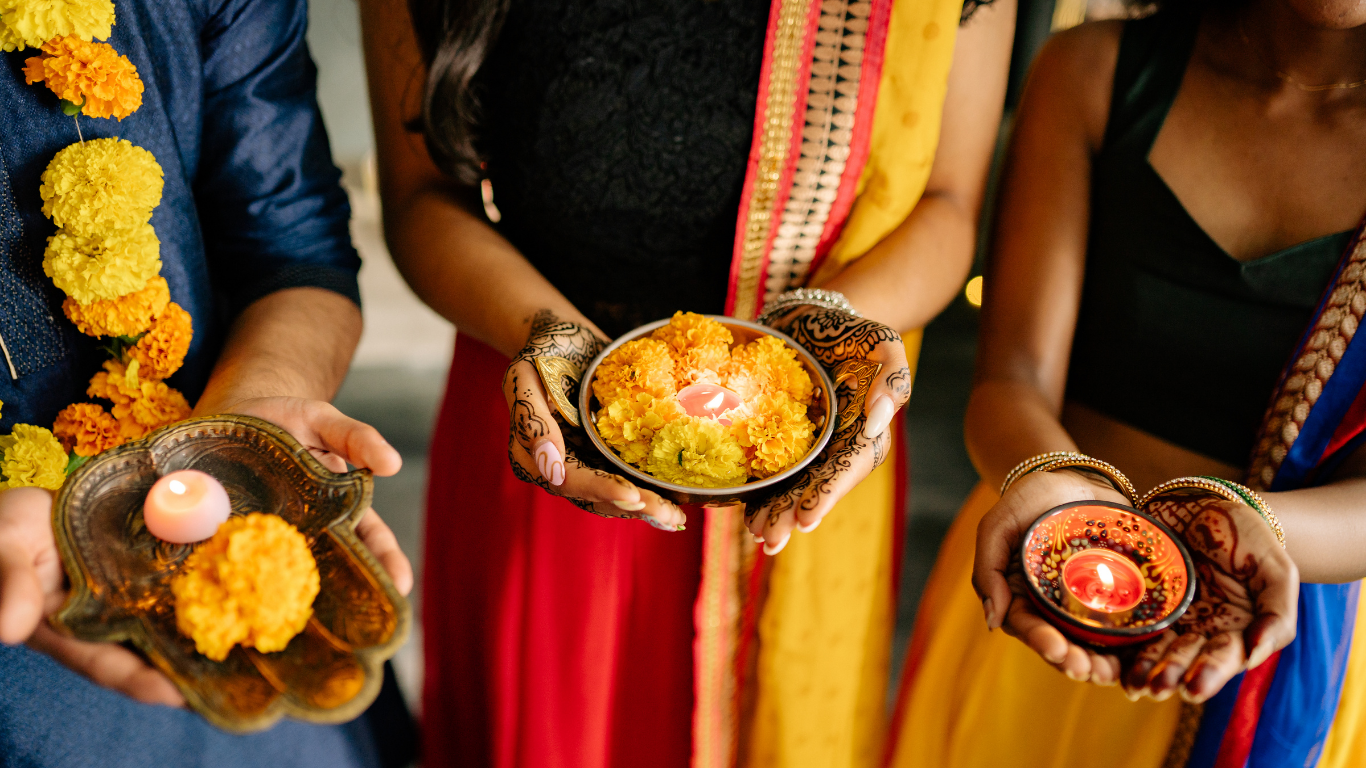
In our home in Belfast we continue celebrating our Indian cultural and religious traditions, the main ones being Hindu Diwali (festival of lights) taking place around mid-October and mid-November and Pongal (harvest festival) that spans 4 days in mid-January. Pongal is a major festival celebrated by all Tamil people in the Indian state of Tamil Nadu, Sri Lanka and the Tamil diaspora across the globe.A big part of Indian traditions is gatherings, meeting people and exchanging gifts. The Irish do the same. It wasn't difficult to incorporate into our already mixed traditions some elements of the local Christmas, Halloween and Easter customs in Indian/Irish style. With the influence from school, my daughter was the leading light in decorating the house for Christmas and Halloween and introducing chocolate eggs as a treat for Easter. The exchange of Christmas cards and Halloween trick-treating led to many happy meetings with our neighbours and new local friends.
Last year we joined a community garden, so widening our circle of friends as well as learning about plants and trees grown in this country, but uncommon in my region in India, examples being strawberries and plums. We visit the local library and take part in craft activities there. I take my daughter to swimming classes and not long ago I've joined the volleyball team. Through these activities I meet people and learn their endearing customs of pleases and thank-yous. I like the way strangers greet you here and start conversations so easily about anything, sharing their common wisdom and advice.
I have been living and working in Belfast for over 4 years. During that time I’ve learnt a lot about the place and its people. I feel comfortable and at ease here. My family is an integral part of this community. We live, work and contribute here. We bought our first house here. Today Belfast is our home but always hanging over me is an uncertain future. Will I always be here? Will Belfast be my forever home?
Feras’ story
-
Feras arrived in Belfast in 2024, leaving behind his first home in Jordan and beginning a new chapter in a new country.
For him, home has always meant more than a place. Home is family, safety, and the feeling of being close to the people you love. It is comfort, belonging, and peace.
Starting life somewhere new is never easy. Feras came to Belfast seeking asylum, and while he continues to build his future here, he is gradually becoming part of the local community and culture. Belfast has begun to feel like a place where he is supported and welcomed.
He now lives independently in the city and is currently searching for work, adjusting step by step to life far from his family. He has lived in Jordan in the past, and Belfast has been his home since 2024.
Feras speaks Arabic and a little English, which he began learning through a childhood friend and later studied briefly in school. Being able to communicate, even in small ways, has helped him settle into life in Belfast.
When asked what he enjoys most about Belfast, Feras spoke warmly about the nature and greenery around the city, one of the small joys that has brought him comfort.
But like many people far from home, Feras also carries deep memories of what he misses.
Above all, he misses his father, especially the simple moments of spending time together,
working on farms, and sharing everyday conversations. He also misses familiar comforts from Jordan, including traditional foods such as kabsa, reminding us how strongly food, culture, and identity are tied to home.
Feras shares his story of finding safety and building a new life in Belfast.
What is home?
Individual interviews
Ania Sułek
‘This is absolutely my home’
Dawid Drożdzak
‘My definition of home changed’
Agnieszka Nowak
‘Home is where I am be myself’
Jerzy Rosman
‘Home is where the heart is’
Agata Dubiecka
‘The sounds and smells of home’
Halina Zerko-Porter
‘The grass smells different here’
Oliwer and Gabriel from POLCA
interview each other ‘What does home mean to you?’
Nicole and Amelia from POLCA
talk about what home means to them
Alan Armenta
‘I love the community here’
Stan Nikolov
‘Home is a state of mind’
Download Our Stories in
Polish or English